• Skip to primary navigation
  • Skip to main content
  • Skip to primary sidebar

  • Basketball Plays
    • Ball Screen Sets
    • Horns Sets
    • Man to Man Post Up
    • Man to Man Isolations
    • Backdoor Plays
    • Man to Man 3 Point Shot Plays
    • 2-3 Zone Attack
    • Baseline Inbound Plays
    • Sideline Inbound Plays
    • Combination Defense Attack
  • Drills
    • Defensive Drills
    • Offensive Drills
    • Competitive Drills
    • Passing Drills
    • Rebounding Drills
    • Shooting and Scoring Drills
    • Toughness Drills
    • Transition & Conversion Drills
    • One on One Drills
  • Blueprint
  • Practice
  • Mental Toughness
  • Skill Development
  • Offense
  • Defense
  • Store

The Introverted Team Leader

The Introverted Team Leader

By Brian Williams on April 12, 2018

Leading with Quiet Strength

By Dr. Cory Dobbs, President, The Academy for Sport Leadership.

On an unusually warm morning, sometime in October, the head coach of a successful basketball program looked at me and said, “He just doesn’t get it. He can’t help us. He simply does not know how to lead this team!” As an invited guest I listened and observed. And listened. And observed some more.

This was a return visit by me to evaluate the team’s culture. A couple of months earlier I’d spent several weeks during the off-season working with the staff and players to build a leader in every locker culture. My visit was part research—to evaluate how “sticky” is our Teamwork Intelligence program (created by The Academy for Sport Leadership), and part coaching—to come back and revisit some of the key practices of the Teamwork Intelligence program with the coaches and players.

The player that caused the coach’s rant was a returning point guard of whom much was expected. In the past, all the point guards the coach deployed were boisterous, passionate, and outwardly emotional. This point guard, however, was unusually quiet on the floor, off the floor, and in the classroom. Conversations with him are always lop‐sided, others doing the talking. The head coach was frustrated that after two years in the program the player had yet to come out of his “shell.”

A person’s choice of interpersonal interaction sometimes offers clues to a deeper driving force—such as introversion or extroversion. One’s inclination to extroversion or introversion can quickly be determined by what I call the “crowded party effect.”

The introvert at a crowded party is likely to find a comfortable seat from which to observe the activity of others. Introverts are inclined to “be quiet” and are drained by such social encounters, while the “party animal” extrovert is energized by such activity and seeks out people to charge their batteries.

Several years ago, Susan Cain, a Harvard Business School professor, delivered one of the most well‐received Ted Talks of all time. Today the YouTube video counts more than 18 million views of her talk on introversion. Cain wrote, the 2012 book “Quiet: The Power of Introverts in a World That Can’t Stop Talking,” which has sold two million copies worldwide. With the Ted Talk and book, Susan Cain has single‐handedly triggered a deeper awareness of and appreciation for the many facets of introversion. She’s introduced a myth-shattering perspective that has transformed the way we view introversion and introverts.
[thrive_leads id=’36827′]
Far more than we are consciously aware of, we live in a society dominated by extroverts. Cain’s research points out that the American culture glorifies extroversion. Sports stars and movie stars are highly paid and followed, and social media thrives on people exposing their innermost thoughts and feelings. Extroverts are highly visible in most settings and situations. Bold personalities are rewarded.

Cain writes, “We’re told that to be great is to be bold, to be happy is to be sociable. We see ourselves as a nation of extroverts—which means that we’ve lost sight of who we really are.” In fact, she notes, one‐third to one‐half of Americans are introverts. So if you’re not one yourself, she often advises audiences, “You’re probably raising or managing or married to one.”

The quiet and reserved point guard that so frustrated the coach, it turns out, was an introvert. A stone cold introvert. After practice the head coach set the stage. Before examining the practice session we sipped iced‐tea—a kind of cooling off period.

Our conversation was soon set in motion. The head coach opened our post‐practice conversation with a “See. I told you so,” reinforcing a tight grip on his perspective. My observation of the practice session that day was, however, quite different.

During the practice I counted 18 personal touches (such as grasping a teammate’s elbow in order to pull the teammate in to hear him speak)—micro acts of leadership—by the point guard. The coach looked at me in a curious way when I stated this fact. So I explained. Each touch by the point guard was a leadership act. A player threw an errant pass that was taken by the opposing squad down the floor for a quick score. Knowing and sensing his teammate’s anger the quiet leader simply walked over and literally lifted his teammate’s head—softly but authoritatively. The teammate immediately shifted back into a positive mode. Such behavior happened at the most appropriate times. During a stop in action the quiet leader walked over to a teammate and softly spoke words of instruction—never calling attention to himself. Rather, in a calm and nonchalant manner the quiet
point guard curiously found all kinds of quiet moments in which to take action and provide leadership.

The seemingly reticent team leader was completely in tune with his teammates. The head coach, however, not looking at these micro‐actions as leadership moments, simply could not see what was right in front of him. The team manager loaded up the video of the practice, allowing me to show display evidence of the “non‐leader” leading.

Most people are comfortable thinking of leaders as being outgoing, visible, and charismatic. Such a perspective is overly narrow.

Scientists now know that, extroverts have no special advantage in leadership. Yes, they tend to be more visible, and assertive, but those are situational advantages.

Introverts tend to process more information and do so accurately as they are often able to mitigate the influence of emotion. Further, introverts seldom need the emotional stimuli that an extrovert requires. They do best in quiet environments where they can interact one-on‐one, or in small groups. Knowing who the team’s introverts and extroverts are can go a long way in building deep and durable interpersonal relationships.

The specter of the introverted team leader touches on a fundamental distinction between action and reflection. When we think of team leaders, we usually envision someone like Tom Brady, LeBron James, Carli Lloyd or Julie Foudy. The image of a team leader is one of action; rare is it when reflection is considered a co‐equal quality. But action without reflection is a suboptimal way of building a cohesive team.

These two aspects of human dynamics, action and reflection, establish the essential elements of leadership. Everything a leader does involves some degree of action on the ground and reflection distilled in making sense of events, incidents, and relationships. As one expert said, “Action without reflection is thoughtless; reflection without action is passive.”

Accordingly, it is no longer impossible to have introverts participate in team leadership. A reorientation to use action (read extrovert) and reflection (read introvert) in creative ways is to ensure a healthy climate conducive to building a high‐performance team culture. To put it simply, if we recognize ways to include the introvert along with the extrovert in team leadership, we can create a leader in every locker.

The Academy for Sport Leadership’s Coaching for Leadership Approach: Our approach to team building is rooted in the belief that leadership is a powerful force for shaping a team’s culture, influencing the growth and development of student-athletes. We find that and those coaches that practice deep leadership, and a deep commitment to Coaching for Leadership, stand above and apart from others in the profession.

NEW RESOURCE FOR COACHES

In Leadership Quest Dr. Cory Dobbs offers student-athletes a leadership fable that is engaging, instructive, and transformative. This book provides a simple, yet powerful, model of leadership that will build confident and effective team leaders for any sport. Using the power of storytelling, Leadership Quest presents a proven framework for student-athletes to follow and become exceptional leaders on the playing field and in everyday life. Leadership Quest advances an athlete-centered approach to developing the leader within each and every student-athlete.

Click here for more information on the: Leadership Quest Pack

About the Author

Dr. Cory Dobbs is a national expert on sport leadership and team building and is the founder of The Academy for Sport Leadership.  A teacher, speaker, consultant, and writer, Dr. Dobbs has worked with professional, collegiate, and high school athletes and coaches teaching leadership as a part of the sports experience.  He facilitates workshops, seminars, and consults with a wide-range of professional organizations and teams.  Dr. Dobbs previously taught in the graduate colleges of business and education at Northern Arizona University, Sport Management and Leadership at Ohio University, and the Jerry Colangelo College of Sports Business at Grand Canyon University.

Contact Information for Dr. Cory Dobbs:
(623) 330.3831 (call or text)
Michigan Point Backdoor Triple Hand Off

By Brian Williams on April 10, 2018

The 2 plays in this post came from the Basketball Hoop Scoop’s eBook (Assembled by Chris Filios) Michigan Two Guard Front Offense Playbook.

This week’s featured eBook bundle is the Michigan Two Guard Offense Playbook and the Versatile Swing Offense Playbook.

Click here for more details on that bundle: Michigan Two Guard Offense Playbook and Versatile Swing Offense Playbook Bundle

Diagrams created with FastDraw


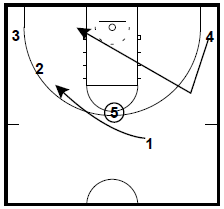
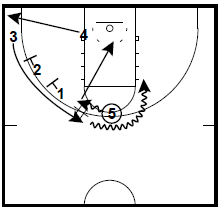
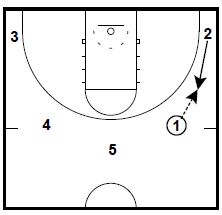
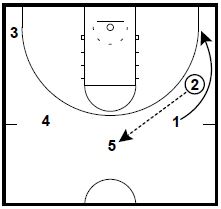
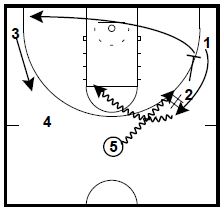
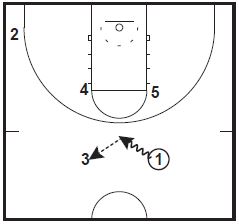
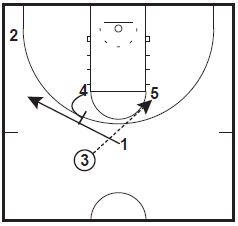
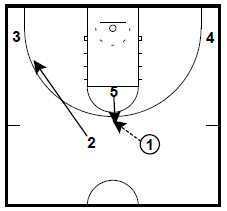
Michigan Point Backdoor Triple Hand Off

5 pops.

1 passes to 5.

2 cuts away.


1 cuts off 5.

4 fills up and back cuts.


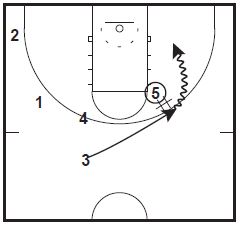
2 and 1 set stagger for 3.

5 runs a dribble hand off with 3.


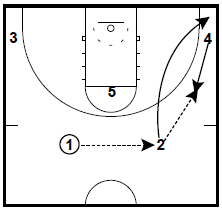
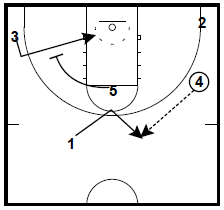
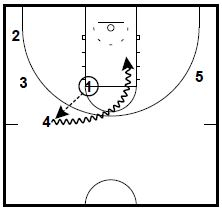
Pin Bump Single-Double

1 reverses to 2.

2 passes to 4.

2 cuts to ball side corner.


1 bumps off 5.

4 passes to 1.

5 spins out and pins down for 3 who back cuts.


Staggered double action for 2.

3 comes off a single from 4.


The 2 plays in this post came from the Basketball Hoop Scoop’s eBook (Assembled by Chris Filios) Michigan Two Guard Front Offense Playbook.

This week’s featured eBook bundle is the Michigan Two Guard Offense Playbook and the Versatile Swing Offense Playbook.

Click here for more details on that bundle: Michigan Two Guard Offense Playbook and Versatile Swing Offense Playbook Bundle

NBA Red Defensive Coverage

By Brian Williams on April 9, 2018

Army Assistant Men’s Basketball Coach Zak Boisvert posted these videos on his tremendous resource site for coaches. PickandPop.net

Coach Boisvert has posted several videos of some of the better schemes he has seen. His YouTube channel is: Zak Boisvert You Tube Channel

He also is also very active on Twitter: @ZakBoisvert

Editor’s Note from Brian. The post is provided as food for thought, not to imply that you should implement this in your defense.

If nothing else, at least you can see how other teams are defending.

There is narration with this video, so please make sure that your sound is on

This is a YouTube video. If you are having trouble viewing it, the reason could be that the network you are on blocks YouTube videos.

Click the play arrow to view the video.

NBA RED Post Defensive Coverage

Attention Based Practice Plan

By Brian Williams on April 5, 2018

This article was contributed by:

Justin Matthew Brandt
[email protected]
CoachJB.weebly.com
Here is a link to his YouTube channel

Here is a link to his Instagram

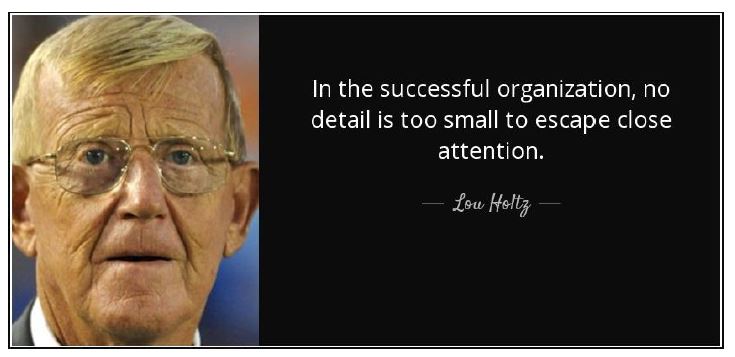
Attention to detail and paying attention in general is a problem that all coaches battle with their athletes during practice, film sessions, games, etc.

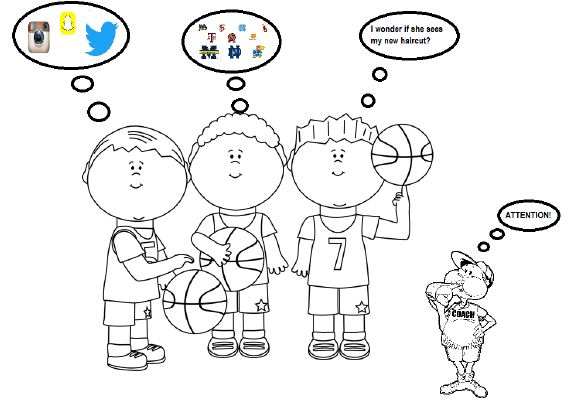
Whether it’s the occasional side conversation while you’re speaking, wandering eyes to the floor or the opposite sex being present in the gymnasium, you have had something challenge their attention from you at some point in time.

The question we will attempt to answer today is, how can we effectively keep our athlete’s attention when it is needed?

I do not believe there are a lot of people out there that will challenge the statement that people tend to focus their attention on the topics they are interested in. Many times we find that our student athletes struggle with the little details because they are not fun or entertaining. Take the example provided below. Most students see a biology book and roll their eyes because they see it as a required class and it can be challenging. What they do not see is an opportunity to get a good grade in an important class that will boost their GPA and increase their chances at getting into the school they want to attend or eventually landing them the job they want.

Now I am NOT suggesting that everything we coach/teach needs to be fun or entertaining. The fact is that the majority of the jobs in the world do not involve fun games and at some point in their lives they need to figure out how to continue to focus and be productive. With the same argument, us as coaches and/or teachers cannot use the same excuse of their complacency to not help this generation of student athletes. Sometimes, it is our own laziness or comfort of conventionalism that hinders us from helping them. While we may very well want to say to them, “suck it up and pay attention, that’s what I had to do” you may find your job a bit easier if you meet them halfway.

Studies show that 78% of Americans aged 12 to 17 have a cell phone, 95% use the internet and 81% use social media outlets. This means that well over half of that teen population that we work with spends the majority of their time gathering information from entertaining sources. So the information you are trying to convey to them via a ten-minute talk, it probably isn’t reaching home.

65% of teens report that they have either participated in, or have been affected by, cyber bullying. This takes us into a complete different issue, conflict resolution. Ask the majority of people what a conflict is and their mind goes to something serious or even physical in nature. However, conflict by definition is a disagreement (n.) or something to be incompatible or at variance (v.). Is this not what we see whenever we redirect an athlete or inform them they are not performing the way we expect them to?

The issue here lies in the fact that they simply are not used to communicating and coping with criticism face to face where appropriate and immediate reaction is required. When presented with a challenging statement via an electronic source, users are given the safety net of time and privacy to respond with freedom in private. Consequences are dealt in a delayed format which promotes bravery in both actions and speech. Think about this the next time you try to challenge an athlete on their performance and they give you that look as if to say, “Who me!?”

So how can we help our athletes focus better and get most out of them?

Firstly, it should be noted that the goldfish won the competition when it comes to adults’ attention span when browsing the internet, so don’t stress too hard over the fun fact above. However, the first 8 seconds is CRITICAL to capturing the audience’s attention. If you do not grab their attention in the first 8 seconds, you’re going to have a big struggle on your hand. Movie makers have known this for years and that’s why they introduce a new stimulus every few seconds to keep their audience’s attention throughout the entire movie. This is why during this article you have seen the introduction of either new fonts, colors or pictures every few seconds or minutes.

*Fun fact – it took teens on average 6.3 seconds to read the first sentence of this article*

The perfect adult attention span lasts around 20 minutes with the average down to around 5 minutes. However, scientists have noticed that your attention tends to dwindle or reset every couple of minutes. So in summation, MAKE YOUR INFORMATION SHORT AND TRANSFERABLE!

Great research Coach, but how do I actually apply this on the court or in the classroom?

You can apply the information provided in this article in a variety of ways. The easiest and least invasive to your coaching/teaching strategies to apply this knowledge is to simply change your tone or positioning while speaking. If you have been explaining something for more than a couple of minutes, and you have other coaches present, get someone else to pick up in the middle of the talk. If you have already done this, another simple way to keep their attention is to change your court location. Doing this not only provides a stimulus of eye focus location, but it causes changes in heart rate which naturally demands the body’s attention.

For a more challenging and invasive approach of how you can better your practices, review the following practice plans.

Editor’s Note from Brian. This is an EXAMPLE to give you thinking about how your practice times for your skills and drills can be broken up to include less time for each segment and to include more segments and more transitions. This is not an exact plan that is meant for you to use as is. Also, regarding the break in the second plan: Our games have timeouts, halftimes, or quarter and official’s monitor reviews depending on the level that you coach. Since those short breaks are a part of our games, it is worth considering including them in practice.

Traditional Practice Plan

10 minutes Warm Up
20 minutes Set Plays
15 minutes Press Offense
15 minutes Press Defense

60 Minutes Total Time

 Attention Based Practice Plan

10 minutes Warm Up
6 minutes Set Plays Basket #1
2 minutes 1 on 1 All Baskets
6 minutes Set Plays Basket #2
2 minutes 2 on 2 All Baskets
6 minutes Press Offense Full Court, 2 sets of Retreat Dribble Series Sideline
6 minutes Press Offense Full Court
3 minutes Break/Shoot Around
4 minutes Press Defense Full Court, 2 sets of Defensive Slides All Baskets
4 minutes Press Defense Full Court, 2 sets of Triangle Closeouts All Baskets
3 minutes Press Defense Full Court

58 minutes Total Time

As you can see both practice plans have an agenda and will accomplish their tasks for the day. However, as you can see from the attention based practice plan, the team has accomplished their tasks, they have promoted personal growth while focusing on a team oriented workout, they have changed locations, promoted a demand for attention changes (one activity to the next) and allowed time for attention resets no longer than six minutes.

One last point that I would like to make is focused on the highlighted section above, “promoted a demand for attention changes”. Many coaches would deem this as a little chaotic for the practice liking and rightfully so. However, I would like to remind coaches that basketball is a very fast paced and chaotic sport. During the 2015-2016 NCAA Division I season, the team that averaged the most amount of possessions per game was the Citadel with 83ppg. The lowest team, the University of Virginia, had 62.7ppg, that’s a league median of 71.1 possessions per game. With those statistics in mind, would you rather have a “traditional practice” that transitioned from one activity to the next four times or an “attention based practice plan” that transitioned 14 times?

Attention to detail or paying attention in general is truly a characteristic that we all struggle with in today’s society. Whether it be us as coaches trying to demand our student athletes’ attention, or us trying to pay attention when we’re sitting through a meeting. If we have the opportunity to enhance our attention skills, we should meet that head on as it will help us be more successful down the road. In closing I ask you to remember what Shane Battier stated about analytics, “Analytics aren’t something that you solely rely on, they are a tool to your success.”

Marshall Thundering Herd Man to Man Pitch Plays

By Brian Williams on April 4, 2018

The following two plays from the Marshall Chaos Offense playbook assembled by Chris Filios for the Scott Peterman’s Basketball HoopScoop.

It is paired with The Spread and Go Motion Offense Playbook as this week’s featured bundle.

You can find out more about the bundle by clicking on this link: Marshall Chaos and Spread and Go Offense Playbooks.

Hopefully pieces of the plays on this page will be useful to you as you develop and continue to improve your offense.

Diagrams created with FastDraw


21 Chicago Pitch

1 passes to 2.


1 sprints around 2 to the deep corner.

2 passes to 5.


2 pins down for 1.

5 DHO with 1.

2 cuts through to corner.


1 pitches to 4.

4 drives the open gap.


Pitch Elbow Hand off

1 pitches to 3.


4 sets fake flare for 1.

3 passes to 5.


3 cuts off 5 for hand off.


These two plays from the Marshall Chaos Offense playbook assembled by Chris Filios for the Scott Peterman’s Basketball HoopScoop.

It is paired with The Spread and Go Motion Offense Playbook as this week’s featured bundle.

You can find out more about the bundle by clicking on this link: Marshall Chaos and Spread and Go Offense Playbooks.

If you are interested in adding to your Coaching Toolbox take look at what I believe is our best offer.

CLICK HERE to select from a list of more than 70 eBooks.


Baseball Shooting Drill

By Brian Williams on April 2, 2018

This drill is from Mike Neighbors, Arkansas Women’s Basketball Coach.

The drill is available on the Arkansas Women’s Basketball You Tube Channel

The drill uses shots that Arkansas gets within their offensive scheme.

The purpose behind posting this is to get you to think about ways to incorporate your schemes into drills that will be put some pressure on your players and give them a chance to build camaraderie when they have some success.

Please make sure your sound is on to see the video.

Click the play arrow to see the drill.

The drill is a YouTube video, so you will need to be on a server that allows you to access YouTube to see the drill.

  • « Go to Previous Page
  • Page 1
  • Interim pages omitted …
  • Page 68
  • Page 69
  • Page 70
  • Page 71
  • Page 72
  • Interim pages omitted …
  • Page 288
  • Go to Next Page »

Primary Sidebar

  • Twitter
  • Facebook
  • Linkedin
coachestoolbox
personaldevelopmenttoolbox
basketballplayerstoolbox
basketballtrainer
athleticperformancetoolbox
coachingbasketball

© Copyright 2026 Coaching Toolbox

Privacy Policy