• Skip to primary navigation
  • Skip to main content
  • Skip to primary sidebar

  • Basketball Plays
    • Ball Screen Sets
    • Horns Sets
    • Man to Man Post Up
    • Man to Man Isolations
    • Backdoor Plays
    • Man to Man 3 Point Shot Plays
    • 2-3 Zone Attack
    • Baseline Inbound Plays
    • Sideline Inbound Plays
    • Combination Defense Attack
  • Drills
    • Defensive Drills
    • Offensive Drills
    • Competitive Drills
    • Passing Drills
    • Rebounding Drills
    • Shooting and Scoring Drills
    • Toughness Drills
    • Transition & Conversion Drills
    • One on One Drills
  • Blueprint
  • Practice
  • Mental Toughness
  • Skill Development
  • Offense
  • Defense
  • Store

Baseline Underneath Inbound vs. 2-3 Zone

Baseline Underneath Inbound vs. 2-3 Zone

By Brian Williams on March 6, 2020

These two baseline inbound plays are selected from the HoopScoop eBook “Best Zone Plays in NCAA” playbook.

The playbook contains Quick Hitters, Special Plays, and Out of Bounds Plays.

If you are interested in finding out more about the eBook, click this link: Best Zone Plays from NCAA DI.

Or, you can purchases any four of our digital playbooks for $35 (62 titles in all–Virginia, Texas Tech, Duke, Kentucky, Brad Stevens, and many others included!) 20 new titles summer 2020!

Click this link for all choices! 4 digital playbooks for $35

These 2 plays are from Bradley.

Diagrams created with FastDraw

The idea behind all of the postings is for you to take them and change them to make them your own.
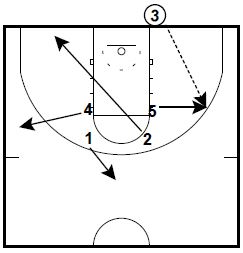
5 cuts to the right wing.

3 passes to 5.

2 cuts to the left short corner.

4 pops out to the left wing. 1 slides to the top of the key.
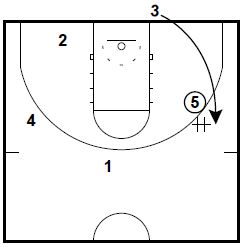
 

3 runs a dribble hand-off with 5.
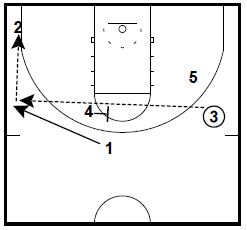


4 screens the middle of the zone.

1 slides to the left wing.

3 skip passes to 1.

1 passes to 2.

You also have the opportunity for 4 to slip the screen if the top defender fights over it.

Play #2
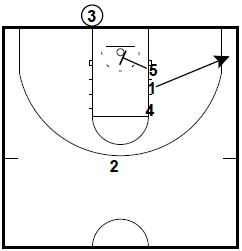
 

5 screens the middle of the zone.

1 pops out to the right corner.
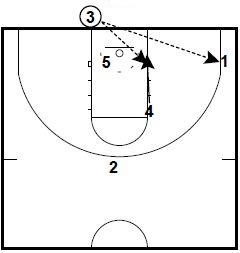


4 slides to the basket.

3 can pass to 4 at the basket or 1 in the corner.

You could use 2 to cut to the ball side corner or as a release if the other options are well defended.

These two baseline inbound plays are selected from the HoopScoop eBook “Best Zone Plays in NCAA” playbook.

The playbook contains Quick Hitters, Special Plays, and Out of Bounds Plays.


If you are interested in finding out more about the eBook this play was taken from, click this link: Best Zone Plays from NCAA DI.

If you are interested in adding to your Coaching Toolbox take look at what I believe is our best offer.

CLICK HERE to select from a list of more than 70 eBooks.
 

Healthy Coaching Staff Conversations

By Brian Williams on March 6, 2020

Focus on the Coaching Staff

HEALTHY CONVERSATION: THE STARTING POINT

The most valuable resource in any organization is the human resource.  The second most valuable resource may just be the way we talk to one another.  That’s because we spend a considerable part of our work lives in conversation—it’s the way we get things done.  And the way we talk and relate to one another is expressed in conversation.  So it’s appropriate to suggest that conversation determines the quality of our work and our work life—for better or worse.

To that end, while it’s self-evident that we have more tools for communication than ever before, our exchanges seem more fragmented and our relationships more disconnected causing us to miss out on the promise of conversation.  Therefore, we need to get smart about how we talk to one another.

Over the past decade and-a-half I’ve witnessed many dysfunctional coaching staffs.  The primary dysfunction is rarely a result of coaching strategy, tactics, or philosophy.  Rather, it is manifested in the way the staff members talk with one another.  The complexity of coaching a team requires a coaching staff to think together, which is accomplished through conversation.  Unfortunately this is often where the wheels fall off the team bus.

Think of a conversation as a dynamic, interactive process that unfolds over time among individuals.  For the most part, the objective of deep conversation (we’ll save shallow conversation for later) is to solve a problem—either task related or person and performance.  The implied goal of communication is to “share” one’s reality.  The flaw is that reality is produced by our individual filters and colored by our unique experiences.

To build a high-performance coaching staff necessitates conversational participants connect rigorously (intensity) and relationally (intimately).   Rigorous conversation is communication that is authentic and stimulates a search for reliability, while relational conversation is designed to promote healthy working relationships and a stimulating environment.  The essence of rigorous and relational conversation is not only to share one’s reality, but to create a reality that includes the voices of all participants.

The coaching world resides in a complex setting—mixing human behavior and real-time decision making.  Most coaches (head and assistant) don’t want merely to survive the decision making process; they want to be effective, or even excellent at what they do.  To do so requires the coaching staff to understand that conversational experience is a vital part of the message.  That is, communication occurs from an emotional, ego-driven perspective as much as it does from a logical mindset.

The emotional aspect of conversation often is a trigger to a quick death of communication.  When someone disagrees with us, we get angry or defensive, and, depending on the status difference, we are likely to dismiss the other’s input.  After all, we simply want the other person to see the world as we see it.

I believe we can transform the way your coaching staff works.  I think rigorous and relational conversation is the answer.  I make this assertion because I know that small-scale conversation is the beating heart of any team.  One conversation, moment, or incident, can have a profound impact on an individual or a team.  One comment, question, or discussion can inspire and provoke fundamental change.   Truth be told, rigorous and relational conversation is the only way to build harmonious, constructive, and mutually beneficial relationships that produce high performance.

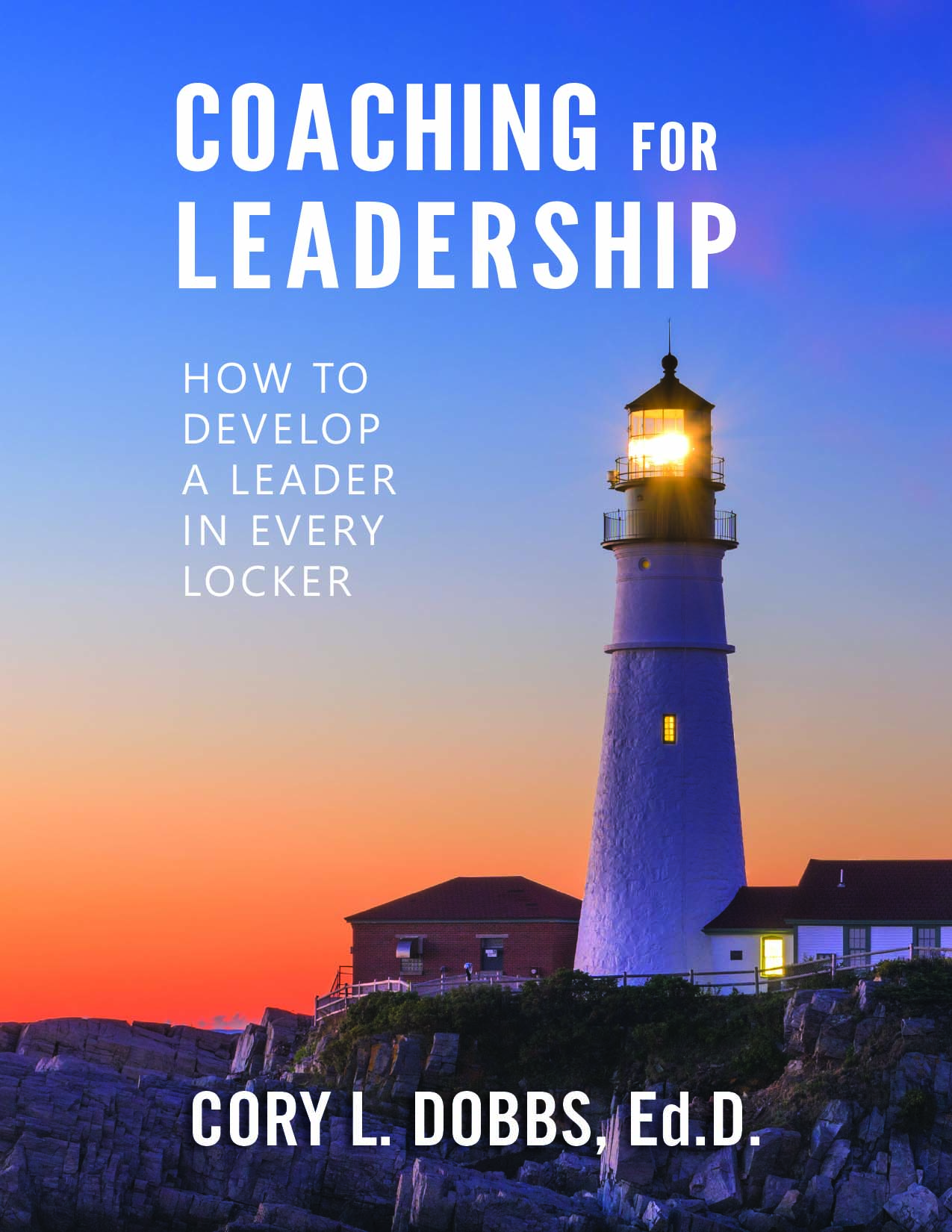
New to the Second Edition of Coaching for Leadership!

We are pleased to announce a new chapter to the second edition of the best-selling Coaching for Leadership. The chapter, The Big Shift: Unlock Your Team’s Potential by Creating Player-Led Teambuilding, connects the previous edition of this book to its origin, as well as to the future of team sports.

The new chapter sets forth a practical and applicable agenda for change and improvement. The reader is introduced to seven vital elements of change; seven shifts of traditional mental models that lead to the new core principles necessary for creating a player-led team culture. Click here for more information about Coaching for Leadership

About Cory Dobbs, Ed.D.

Cory Dobbs is the founder of The Academy for Sport Leadership and a nationally recognized thought leader in the areas of leadership and team building.  Cory is an accomplished researcher of human experience. Cory engages in naturalistic inquiry seeking in-depth understanding of social phenomena within their natural setting.

A college basketball coach, Cory’s coaching background includes experience at the NCAA DII, NJCAA, and high school levels of competition.  After a decade of research and development Cory unleashed the groundbreaking Teamwork Intelligence program for student-athletics. Teamwork Intelligence illuminates the process of designing an elite team by using the 20 principles and concepts along with the 8 roles of a team player he’s uncovered while performing research.

Cory has worked with professional athletes, collegiate athletic programs, and high schools teaching leadership and team building as a part of the sports experience and education process.  As a consultant and trainer Dr. Dobbs has worked with Fortune 500 organizations such as American Express, Honeywell, and Avnet, as well as medium and small businesses. Dr. Dobbs taught leadership and organizational change at Northern Arizona University, Ohio University, and Grand Canyon University.

Around the Horn Passing Drill

By Brian Williams on March 4, 2020

This video is from a Xavier Men’s practice with Head Coach Travis Steele

The drill is to work on getting open and passing on the perimeter.

You will need to be on a network that allows you to access You Tube to view the video.

Click the play arrow to view the video.

There is narration with the video, so please make sure that your sound is on.

You can find out more about the Championship Productions video that this clip is from at this link: Open Practice:Transition Offense, Spread Attack, & Skill Development

The video with Coach is available in both DVD and online format.

Stack 2 Baseline Inbound Play

By Brian Williams on March 2, 2020

This play is broken down by Coach Justin Brandt.

The other resources he has to share can be found at CoachJB.Weebly.com or you can follow his Instagram at @coachjustinbrandt for daily posts.

You will need to be on a network that allows you to access You Tube to view the video.

Click the play arrow to view the video.

There is narration with the video, so please make sure that your sound is on.

You might not want to run the entire play as is, but hopefully you can take parts of it and improve what you do.

The first part of the video, the guard takes a quick 3 point shot. Please continue to watch the entire one minute video as that is not what the play is designed to get.

Are You Trustworthy?

By Brian Williams on February 28, 2020

Are You Trustworthy?
Dr. Cory Dobbs
The Academy for Sport Leadership

Make no mistake about it: trust is a cornerstone of every relationship.  With it you can build a great coaching staff and team of student-athletes.  Without it, well…

Every leadership act and the reception of those acts involve trust.  It is expressed in every encounter; it is something we experience in every interaction with another human being.  Healthy relationships are the product of trust and the foundation of cohesive teams.  And unhealthy relationships, those lacking in reciprocal trust, invites distrust, deceit, selfishness, isolation, and rips relationships apart.

It’s safe to say that your coaching colleagues and players demand trustworthiness.  But what exactly is trust?

Trust is a multi-faceted concept that leaders can gain, and lose.  In order to better understand trust, we must consider its four dimensions.  Here’s a framework I use to analyze trustworthiness.

Cognitive Trust:  Cognitive trust is knowledge-driven. It emerges from one’s knowledge of the situation and expressed by alignment of a coach’s words and actions. This allows a player to predict whether or not a coach is to be trusted in certain situations.

Affective Trust:  This is the emotion-driven element of trust that can create either great depth of relationship, or shallow transactional interactions. Affective trust arises from one’s feelings generated by the level of care and concern demonstrated by the coach.

Procedural Trust:  This is the process-driven component to leadership trust.  To achieve objectives every team has a wide range of systems or procedures—ways of doing things. Your offensive/defensive style and philosophy are bounded by procedures. Coaches are seemingly always “selling” their system and looking for “buy in” by the student-athlete.
[thrive_leads id=’36827′]
Purposive Trust:  This is the mission-driven component. Shared values and shared goals, as they relate to the growth and development of the student-athlete, form the foundation of purposive trust. This type of trust refers to your actions having or serving a purpose that benefits all today and tomorrow.

These are not trivial distinctions.  Your credibility is at stake daily.  You can be trustworthy in three dimensions and distrusted in the other dimension, and therefore labeled as untrustworthy.   However, by detecting the dimension that is holding down your trustworthiness, you can correct course and earn the trust and confidence of others.

New to the Second Edition of Coaching for Leadership!

We are pleased to announce a new chapter to the second edition of the best-selling Coaching for Leadership. The chapter, The Big Shift: Unlock Your Team’s Potential by Creating Player-Led Teambuilding, connects the previous edition of this book to its origin, as well as to the future of team sports.

The new chapter sets forth a practical and applicable agenda for change and improvement. The reader is introduced to seven vital elements of change; seven shifts of traditional mental models that lead to the new core principles necessary for creating a player-led team culture. Click here for more information about Coaching for Leadership


About Cory Dobbs, Ed.D.

Cory Dobbs is the founder of The Academy for Sport Leadership and a nationally recognized thought leader in the areas of leadership and team building.  Cory is an accomplished researcher of human experience. Cory engages in naturalistic inquiry seeking in-depth understanding of social phenomena within their natural setting.

A college basketball coach, Cory’s coaching background includes experience at the NCAA DII, NJCAA, and high school levels of competition.  After a decade of research and development Cory unleashed the groundbreaking Teamwork Intelligence program for student-athletics. Teamwork Intelligence illuminates the process of designing an elite team by using the 20 principles and concepts along with the 8 roles of a team player he’s uncovered while performing research.

Cory has worked with professional athletes, collegiate athletic programs, and high schools teaching leadership and team building as a part of the sports experience and education process.  As a consultant and trainer Dr. Dobbs has worked with Fortune 500 organizations such as American Express, Honeywell, and Avnet, as well as medium and small businesses. Dr. Dobbs taught leadership and organizational change at Northern Arizona University, Ohio University, and Grand Canyon University.

2 Zipper Backdoor Actions

By Brian Williams on February 28, 2020

Army Men’s Assistant Coach Zak Boisvert has assembled some clips of 2 backdoor actions that can be run from a zipper cut.

Zak has an outstanding site with posts on various coaching topics at www.pickandpop.net

His YouTube channel has several videos with various types of man to man plays, zone sets, and inbounds plays as well as clips on various defensive coverages.

You can subscribe to receive an update when he posts a new video Zak Boisvert You Tube Channel

You can follow him on Twitter at this link: @ZakBoisvert

Click play to see the video

This is a YouTube video, so you will need to be on a server that allows you YouTube access.

  • « Go to Previous Page
  • Page 1
  • Interim pages omitted …
  • Page 35
  • Page 36
  • Page 37
  • Page 38
  • Page 39
  • Interim pages omitted …
  • Page 288
  • Go to Next Page »

Primary Sidebar

  • Twitter
  • Facebook
  • Linkedin
coachestoolbox
personaldevelopmenttoolbox
basketballplayerstoolbox
basketballtrainer
athleticperformancetoolbox
coachingbasketball

© Copyright 2026 Coaching Toolbox

Privacy Policy