• Skip to primary navigation
  • Skip to main content
  • Skip to primary sidebar

  • Basketball Plays
    • Ball Screen Sets
    • Horns Sets
    • Man to Man Post Up
    • Man to Man Isolations
    • Backdoor Plays
    • Man to Man 3 Point Shot Plays
    • 2-3 Zone Attack
    • Baseline Inbound Plays
    • Sideline Inbound Plays
    • Combination Defense Attack
  • Drills
    • Defensive Drills
    • Offensive Drills
    • Competitive Drills
    • Passing Drills
    • Rebounding Drills
    • Shooting and Scoring Drills
    • Toughness Drills
    • Transition & Conversion Drills
    • One on One Drills
  • Blueprint
  • Practice
  • Mental Toughness
  • Skill Development
  • Offense
  • Defense
  • Store

Coaching Basketball The ABCs for Basketball Players

Coaching Basketball The ABCs for Basketball Players

By Brian Williams on January 21, 2015

I found this list to share with your players on Mayville State University Women’s Basketball Coach Dennis Hutter’s site www.coachhutter.com.

My hope is that you can make some adaptations to the document that fit your basketball program’s standards and ideals and share it with your players.

The ABC’s of Comets Basketball

Attitude – An Attitude of Gratitude, writing thank you notes once a week to someone who has helped you.

Balance – The ability to be successful in life while dealing with your basketball, academic and personal life.

Commitment – What every player understands is necessary to become the player and team we want to be.

Discipline – Doing the right thing, at the right time, every time you do it, no matter who is watching.

Excellence – What we achieve every day through effort, energy, execution and emphasis on the little things.

Family – What we are, we are more than a team we are a Family.

Greatness –What we strive for everyday from on the floor to in the classroom to in our personal lives.

Honor – Understanding the opportunity they have to play College Basketball.

Integrity – Handling all situations with a positive mental, physical and emotional state of mind.

Journey – It is not the finish line, it is everything done in the time heading to the finish line.

Knowledge – Upperclassmen passing down the culture of our program to the new players.

Leadership – Every player on our team has a leadership responsibility, and that is your Example.

Motivation – What will make you the player that you want to be, intrinsic motivation cannot be taught.

N.B.A. – Next Best Action.

Opportunity – What every player gets being a part of our family, from Varsity to Junior Varsity.

Pride – Understanding what/who you are playing for, and giving everything you have for that cause.

Quality – The product produced by doing the right things.

Respect – The manner in which we treat all people. We care about people.

Servanthood – Giving back to the people who helped you get to where you are.

Tenacity – Our Attitude whenever we step on the floor.

Unselfishness – Being able to take the attention off of ourselves and put it on our teammates.

Victory – What we strive for every time we step on the floor. Not just on the scoreboard.

WIN – What’s Important Now?

Xample – It’s not the Main thing, it’s the ONLY thing!

Youth – Interacting with youth around the area through camps, helping at their school and games.

Zeal – The way in which we approach every basketball situation.
Basketball Plays Wheel Circle

By Brian Williams on January 20, 2015

Coach Vonn Read has submitted several plays from his playbook series The Basketball Encyclopedia of Plays to the Coaching Toolbox.

Coach Read has also served as an assistant coach in the WNBA with the Phoenix Mercury, Orlando Miracle, and San Antonio Silver Stars.

He was an advanced scout for the Orlando Magic as well as The Charlotte Sting.


Wheel 2/3 Circle

Diagrams created with FastDraw

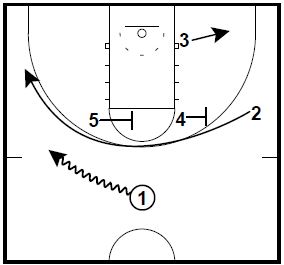
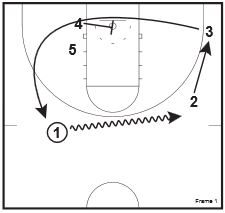
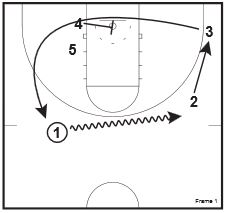
basketball-plays-wheel-circle1

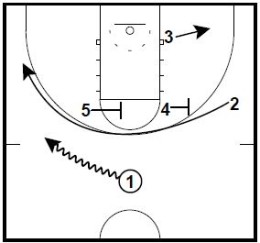
2 will sprint hard over the top of the screens set by 4 and 5.

This is a decoy action, used to set up the baseline runner action.


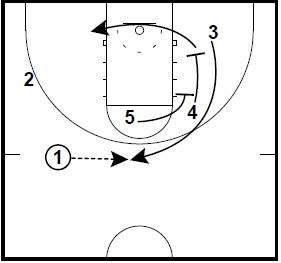
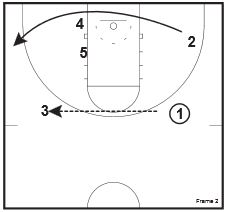
basketball-plays-wheel-circle2

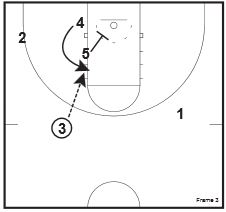
3 will sprint hard off the stagger screens set by 4 and 5 to receive the pass at the top.


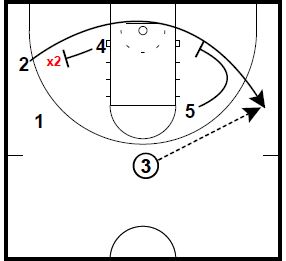
basketball-plays-wheel-circle3

2 will sprint hard off the double screens low set by 4 and 5 for the shot.


Wheel Circle Lob

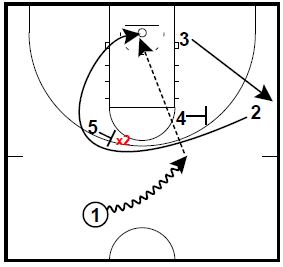
basketball-plays-wheel-circle4

Here is an option that you might be able to get at times

2 will cut hard off the screens set by 4 and 5.

2 will curl hard to the basket coming off a brush screen set by 5.

1 will pass to 2 for the curl lob!!

Coach Read has also put together The Basketball Encyclopedia of plays. You can check them out here: The Basketball Encyclopedia of Plays or read more about the books:

Any coach looking for the latest and innovative plays from the Professional, College, or High School levels can stop looking. With a compilation of over 7,700 different plays, you will never need to purchase another basketball playbook again. These playbooks can be used as a great reference tool for years to come. This 2 Volume Book includes plays from 19 different play categories, and they are the most extensive playbooks on the market.

The Basketball Encyclopedia of Plays (Platinum Series) contains over 7,700 Plays (Both Volumes combined) from the NBA, WNBA, USBL, and College levels from someone who has worked as an Advanced Scout or Coach on each level!!! This book has been intensely compiled over the last 21 years, with plays taken from a lot of NBA Coaches (past and present), WNBA coaches, and College coaches (Men’s and Women’s) from around the country.

Any coach that is serious about improving their knowledge of the game from an X and O standpoint will benefit tremendously from these books. These Books can be used to discover New Quick hitters, add a New Package to your playbook, or develop an entire Offensive System. There are a lot of new ideas and concepts in these books to study, and the Basketball Encyclopedia of Plays can be a great resource for coaches on all levels!!! This book is definitely for those X and O junkies who are always looking to improve as a Coach.

“THE GAME IS ALWAYS CHANGING? ARE YOU?” Vonn Read

Here is the link: The Basketball Encyclopedia of Plays

Basketball Drills Pride Defensive Drill

By Brian Williams on January 19, 2015

by Coach John Kimble
CoachJohnKimble.com

Retired high school and college coach

Published in Basketball Sense Magazine  & in Winning Hoops

The “Pride Drill” can predominantly be an individual defensive drill that works on defensive techniques and skills. In addition to that, this drill is important in developing a tough hard-nosed attitude for every defensive player, as well as establishing a high intensity level for each player. With the physical and mental effort that this drill requires, the drill also becomes a great conditioning drill.

We also wish to incorporate offensive fundamental work into the drill (to add offensive work and additional intensity for both the offense and the defense). This drill, when properly performed by both the coaching staff and the players, will produce what the drill’s name is—that is pride in how well the players play defense.

Some of the offensive fundamentals and techniques that we can work on are the different kinds of screens, cuts, passes, and other offensive fundamentals that are used in every game. The various types of dribbling that we expect our players to be able to use in games are heavily worked on. The dribbles that we believe our players should use in games and should practice daily are: ‘behind-the-back’ dribbling, ‘between-the-leg’ dribbling, and ‘front-crossover’ dribbling. We constantly are emphasizing the proper techniques of all of these offensive fundamentals that are utilized in this drill. Each player is required to always go at “game speed”.

The Pride Drill can be expanded in different manners. One form of expansion is described below.

The drill is started with offensive restrictions for two important reasons. One reason is to allow the defense an opportunity to succeed before making the drill more difficult and more “game-realistic” as the defenders progress in developing skills and building confidence. The second reason for giving offensive restrictions is to force the offensive players into working on specific ball-handling techniques on which the coaching staff feels that either the team or individuals need to improve.

One way of making the drill more difficult (and therefore more “game-realistic”) is to lengthen and widen the dribbling area. At the beginning, it can be shortened and narrowed to promote success for the defenders. As the defenders master the defensive skills and techniques, the drill can be made more challenging and “game realistic” by expanding the offensive dribbling area.

We try to use the ‘overload theory’ in all of our drills to make the drills as tough as possible physically and mentally. The intensity level, the pressure, the competition, the demands, the ‘game-speed’ is to simulate game realism. If players can handle these demanding drills, they will be better prepared to handle the pressures and challenges that in an actual game. We want the games to be easier than the drills.

As the players develop their confidence, their ability level, and the proper techniques; we can expand the area used in The Pride Drill. When the drill area can be widened and lengthened to using the full length of the court, the drill can also then be expanded into improving on the many different defensive techniques being applied during the course of the Pride Drill.

Some of the defensive techniques that can be worked on and emphasized in the Pride Drill are: 1] taking the charge, 2] defending a “killed dribbler”, 3] defending a cutter [on a give-n-go situation], 4] boxing out a shooter [off of the dribble], 5] recover after the dribbler has actually beaten the defender, 6] diving for loose balls, 7] closing out on a potential driver/jump-shooter,  8] defending against an ‘on-the-ball’ screen, 9] defending against an ‘off-the-ball screen’, 10] helping out on a teammate’s man and then recovering onto his own man, 11] sprinting out of a ‘trap’ situation and picking up his own man, 12] “wolf” deflecting from behind and getting ahead of the dribbler, 13] jump-switching onto the new dribbler.

These and other defensive scenarios can be practiced at the very beginning and at the very end of the ‘dribbling area’. Different situations can be used every time at the beginning and at the end of each ‘offensive trip’ down the lane both offensively, as well as defensively. This keeps all players involved mentally alert and focused.

Some of the offensive scenarios that or offensive players can work on at the beginning of the ‘offensive trips’ are: a] simply receiving a normal pass,   b] receiving ‘off the ball’ screens before catching the pass, c] shot-faking after receiving the pass, but before starting the dribble-drive, and d] after catching a pass and then receiving ball screens.

During the ‘offensive trip’, the dribbler may be asked to work on and/or use a specific type of dribble, or a to make a specific type of pass to a coach and the running a ‘give-n-go cut’.

At the end of the ‘offensive trip’, the dribbler may be required to shoot the ball, or charge into the defender, or kill the dribble, or roll the ball across the floor (to simulate a loose ball fumble).

It must be clearly stated that the defensive techniques that can be emphasized in the Pride Drill must be taught to the players first before they are stressed and emphasized in any drill.   Once they are taught, they can be practiced and worked on, in this and other particular defensive drills.

Here is an example of the different ‘defensive trips’ that your team can work on. Different combinations should be changed daily. This will help all players learn how to listen and follow instructions, both offensively and defensively.

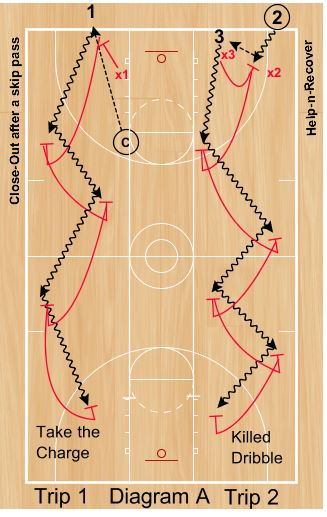
On the first trip down the court, the dribbler and the defender can create a situation where the defense must defend the new dribbler after he has received skip pass.

basketball-drills-pride1The defender starts in a ‘pistol’ stance, as if he were playing help side defense and his man is more than two perimeter passes away from the ball. A coach could then skip-pass the ball to the defender’s man. This would then force the defender to start the first trip by ‘closing out’ on the new receiver-dribbler. The dribbler now zig-zags down the dribbling area (with the defender applying the proper ‘on-the-ball defensive techniques’. When the dribbler gets to the end of the lane, the defender then draws an offensive charge on the dribbler.

The dribbler can simply put the ball into the chest of the defender to establish the physical contact required to initiate the offensive foul. There does not have to be any other physical contact between the two players, thus decreasing the risks of injuries to either participating player. When the ball has made the contact with the defender, the defender pushes off on his heels, falling to the floor. In drawing the charge, the following points of emphasis should be stressed to the players: 1] protect the groin and chest area by locking your arms in front of those two areas, 2] push off backward with the heels at the exact moment of contact, 3] tuck the chin, 4] try to slide on the tail on the floor, 5] raise the legs up into the chest area to protect from the offensive player landing on the defender, 6] grunt out an “ugh!” to help the official make the ‘charging’ call. The drill then continues with a new pair of players. We have the offensive player help the defender up after taking the charge.

The first pair of players go to the end of the line and switch defensive-offensive roles. SEE DIAGRAM A.

The second trip could begin with the main defender starting as a “one-pass-away” off-the-ball defender.

The ‘dummy dribbler’ should dribble into the gap of the two defenders. The main defender then “helps” (to stop penetration) and “recovers” to his original man as his offensive opponent receives the pass. From there, the defender uses the proper “push-push-push” and “drop step” techniques as he zig-zags down the dribbling alley. When the dribbler reaches the far baseline, he kills his dribble. This causes the defender to defend a “killed dribbler”. The major points that are highlighted in defending a “killed dribbler” are: 1] stepping up hard into the ‘killed’ dribbler and forcing the potential passer to put the ball over his head or to turn away from the hard defensive pressure that is being applied. This takes away the majority of the potential pass receivers that the passer has, [And remember that the passer has only 5 seconds to find that open receiver and make the pass to him] 2] cross face with the hands and prevent the passer from bringing the ball back down to waist or chest level, 3] we want the defender to yell “”work!, work!, work” and pressure the passer as much as possible. SEE DIAGRAM A.

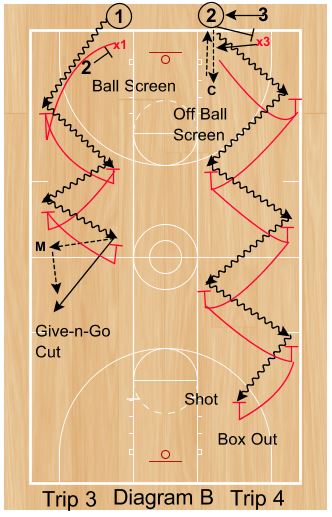
The third trip can be initiated with one or two ‘dummy-screeners’ “ball-screening” the defender.

basketball-drills-pride2On the third trip down the defensive lane, the defender is still working on the proper ball defender’s techniques with his feet and his hands. The proper stance is stressed with the proper “push” technique of the feet legs. The “dig hand” and the “extended hand and arm” techniques are constantly reinforced. The defender must feel for the screen and ‘go over the top (ball side of the screen) and hustle to stay or get ahead of the dribbler.

After turning the dribbler several times down the dribbling alley, the dribbler passes the ball to a coach or manager who is standing near the mid court line. As soon as that pass is made, the dribbler-passer becomes a cutter-receiver. He makes a very hard “give-n-go” cut toward the end of the alley. The defender has to become a defender against a receiver (instead of a dribbler) and defend the ‘give-n-go’ cut. The defender should “jump to the ball” and “match hands and belly-buttons”. He should yell “Help!” and snap his head and look down his new ‘long-arm’, attempting to see the ball and his man. The dummy passer should force a pass to the give-n-go cutter, resulting in either a completion, a pass deflection, or an interception. SEE DIAGRAM B.

The fourth trip could start with an ‘off-the-ball’ screen on the original defender.

He should go ‘ball side’ of the screen, “skinny and slide through with a ‘long-arm’”. The defender should go full speed but allow the pass to be made. Once the pass is completed, the dribbling and the defensive zig-zagging starts again down the dribbling alley, with both players working on their respective techniques. At the end of the fourth trip, the dribbler jumps and shoots the ball at an imaginary basket several feet in front of him (to simulate a jump shot off of the dribble). At the end of this trip, the defender works on defending a shooter and also boxing out a shooter.

The defender defends against the shot by: 1] not leaving the ground until the shooter leaves the ground, 2] extending the hand [nearest the ball] and arm as high as possible, 3] front-pivots into the shooter and boxes out the shooter. The defender should maintain contact on the shooter for 3 seconds before quitting. Cardinal rules that we stress to our defenders on the shooter are: a] don’t foul a jump-shooter’, b] don’t leave the ground until the shooter leaves the ground, c] don’t give the shooter a second scoring opportunity. SEE DIAGRAM B.

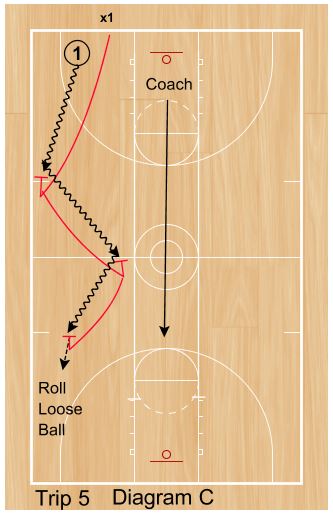
On the fifth trip down the floor, the dribbler is allowed a two-step advantage on the defender.

basketball-drills-pride3The ball defender works on the premise that the offensive dribbler has beaten him and he is to recover and continue guarding the offensive player. The defender must realize that he is beaten, pivot and open up, get the correct pursuit angle and sprint to a spot ahead of the advancing dribbler. He then must get in front of the dribbler and be “squared up” on him, knowing that the dribbler will then most likely try to change directions.

He should anticipate another defensive change of direction. The “point of emphasis” teaching phrase we use at this point is to tell the defense “they are there physically, but mentally they are already drop-stepping toward the new direction by the dribbler. The dribbler then continues “zig-zagging” down toward the far baseline. At the end of the trip, the dribbler simulates a fumbled loose ball.   After the dribbler kills his dribble, he simply rolls out a ball for the defender to dive after—simulating a fumble. SEE DIAGRAM C.

Obviously, this is definitely a defensive-minded drill that requires effort from both all players as well as coaches. But the drill can be enhanced by having the dribbler working with both hands on the various types of dribbles the coaching staff allows. The head should stay up, with the body in a semi-crouch, dribbling quickly but not in a hurry. The various dribbles used could be any or all of the following: 1] the front crossover, 2] the between-the-legs dribble, 3] the behind-the-back dribble. The coaching staff could instruct the dribblers to use specific dribbles to improve upon, or a combination of them to work on offensive improvement.

Coaches should constantly be moving up and down the coaching alley, (SEE DIAGRAM C), as they constantly are teaching, correcting, cheering, motivating, and leading (by example). The more ‘points of emphasis’ and excitement the coach staff can generate and demonstrate (by example) the more motivated the players will be.   Players will feed off of other players’ and coaches’ intensity level and desire. Enthusiasm, desire, and effort all are contagious and will spread throughout the team.

Coaches should be demanding, detailed, and offer constructive criticism whenever it is needed, but positive in their teaching the techniques. It is very important that coaches work hard at being a good example to the players in the proper levels of intensity, excitement, energy, and their own effort during the drill.

DEFENSIVE ‘PRIDE DRILL’ STATIONS

(STARTING   SITUATIONS)

A. “Closeout” from a Skip-pass
B. Help-N-Recover
C. Ball Screen
D. Off-the-ball screen
E. From a Beaten Position
F. ’55 Soft’ Defensive Action
G. ‘Jump Switch’ Action
H. Sprint out of trap to the dribbler
I.  ‘Wolf! Wolf! to become a ‘Container’
J. From a ‘Stalker’ to become a ‘Container’

(FINISHING   SITUATIONS)

K. Draw the Charge
L. “Work! Work!” on a ‘killed dribbler’
M. ‘Give-n-Go Cutter’
N. Defend and box-out a ‘shooter’
O. Dive for a loose ball
P. Trap a new receiver
Q. Live “1 on 1′ Action

The dribbler must zig-zag and finally force the defense into the ‘paint’ and then shoot the ball. He must then get an offensive rebound for a ‘stickback’. When the defender gets the defensive rebound, he then must ‘dribble outlet’ the ball until the ‘new’ defender “turns” him at least one time.

R. Live “1 on 1” Action

The offensive dribbler must try and beat the defender, using both boundary lines, regardless of how wide or narrow they are. The dribbler should use both hands with his head constantly up looking at the rim. He should be using the various types of dribbles he can use.

There are countless combinations of ‘starting and ending’ situations that can be utilized. Mixing these combinations up helps eliminate boredom and complacency of the players. They are forced to listen and concentrate on remembering the many different defensive scenarios that the coaching staff lays out for them in this drill.   This variety of scenarios will not only improve players’ concentration , but will also help defensive players improve on the many different defensive skills and techniques to be a better overall defender. Offensive players can also improve many different offensive ball-handling skills and techniques in this defensive-minded breakdown drill.

About the Author

Coach Kimble was the Head Basketball Coaching position at Deland-Weldon (IL) High School for five years (91-43) that included 2 Regional Championships, 2 Regional Runner-Ups and 1 Sectional Tournament Runner-up. He then moved to Dunlap (IL) High School (90-45) with 2 Regional Runners-up, 1 Regional, 1 Sectional and 1 Super-Sectional Championship and a final 2nd Place Finish in the Illinois Class A State Tournament. He was an Assistant Basketball Coach at Central Florida Community College in Ocala, FL for 4 years, followed with 10 years as the Head Basketball Coach at Crestview (FL) High School, averaging over 16 wins per season.

He also has had articles published in the following publications such as: The Basketball Bulletin of the National Association of Basketball Coaches, the Scholastic Coach and Athletic Journal, Winning Hoops, Basketball Sense, and Coaching Basketball. He has also written and has had five books published along with over 25 different DVDs by Coaches Choice and Fever River Sports Production.

See him on Twitter @CoachJohnKimble and his Web Page “www.CoachJohnKimble.com”

Coaching Basketball Bob Hurley Uptempo Practice

By Brian Williams on January 16, 2015

A few takeaways from some of Bob Hurley’s thoughts on practices. You might already do a lot of these things, and some you won’t agree with, but it is always good to see what the great ones do.

Shared by Victor Sfera as a part of Coach Scott Peterman’s bundle of Greatest Basketball Coaching Notes Collection
.
These competitive basketball drills from Coach Bruce Weber come from Coach Scott Peterman of the Men’s Basketball Hoopscoop Coaching site.

Bob Hurley Uptempo Practice

I. Practice Essentials

‐Put it Down on Paper
o Can’t wing practices, plan in advance!
o Hurley keeps practices for several years to compare current quality of practice
o Stick to what you write down!

‐Alternate Hard and Easy
o Hard parts of practice shouldn’t last more than 5 minutes
o Alternate hard and easy parts of practice

‐Practice the Way You Play
o St. Anthony’s practice mostly in the fullcourt since they are an up and down team

‐2/3 time on individual skills, 1/3 team
o Work on individual skills to improve the overall team

‐Practice to Improve Team 1st
o Treat every game the same (Kids notice when something is different)
o Focus on your opponent 2nd

‐Breakdown Work Daily
o Have 1 coach with big men, 1 with guards

‐Shoot 20 minutes Daily
o Everything else you practice is worthless if you can’t take advantage of scoring opportunities

‐Shorten Practices as Season Goes On But Keep Intensity Up!

‐Special Situation Practices Regularly

o Hurley has 1 special situation practice per 2 weeks (1 1/2 hours goes over 20 different
situations)

‐Shorten Practices Pre and Post Game
o Before: focus on things you want done in the game but leave time for legs to recover for game
o After: If team has bad game, don’t take it out on your team (they didn’t intentionally lose.) Teach instead

‐Start and End Each Day with Meeting
o Starts positive
o Ends positive (reminders for what’s coming up and tomorrow’s focus)

II. Daily Practice Tips

1. Players are responsible for the mood and correcting mistakes
a. Leaders on team need to be held accountable for getting it going
b. Coaches just make a suitable situation for learning
2. Team Meeting at Beginning and End of Practice
3. Early Drills
a. Players call out names of teammates and names of drills
4. Head Coach uses each player’s name within first 15 minutes
5. Earn Maroon Shirt
a. No such thing as a game player (come to practice and work)
b. Designate 5 players who have maroon shirts at beginning of season (starters)
c. Each day the 2nd unit (Gold Unit) fight to earn the maroon shirts and the starters fight to keep them
d. 5 players who finish a practice with maroon shirt will start the next day’s practice with them on; if next day is a game those 5 will start
6. Change Practice Partners Regularly
a. New faces help push players instead of settle
7. Keep stats on drills
a. Have something to shoot for
8. Listen to Practice
a. You can find out a lot about your team by closing your eyes for a few seconds in practice
9. Use a variety of drills
a. Identify where you got them from
b. Makes players feel like they have the edge
10. All Conditioning with the ball
a. Don’t run just to run unless punishment
11. Utilize assistants and gym space
12. End Practice on Positive Note
a. Reward practice players for effort

III. Warm‐up Drills

• 3 Man Weave (5 passes, 4 passes, 3 passes)‐ Up and Back x2
• 3 players pass back and forth (there) Breakout 1 pass for layup; opp. Wing covers backboard
• Chase the Point Guard
o PG has 4 dribbles to take length of the court
o 2 players on defense chase the point guard once the first dribble hits the floor
o When defense comes back for 2 on 1: Inbounder baseball passes to wing
• Chase the Point Guard‐ Drill B
o PG has a teammate; pass back and forth
o 3 defenders chasing
o Coming back: 3 on 2‐ outlet pass

III. Shooting

• 4 ball shooting
o Baby hook
o Smart shot
o Curl @ Elbow rip back to middle
o3 point shot; big men shot fake jumper

• Follow the leader (Partner shooting)
o Group of 2; possibly 3‐‐‐1 ball Lead shooter, follower
o Whatever the lead shooter does, the follower(s) does

IV. Rebounding & Finishing Drills

• Superman drill
o Throw ball on opp. Side of the glass and go get it, landing outside the paint
• Tip Drill
o Throw off glass and tip it in (finish everything)
• Throw off glass, rip to chin, and score
• Rip, fake, and power up
• Rip, fake, and reverse layup

V. Ballhandling

• Quick change partner drill
o Start with right hand facing partner
o When arms length away from partner, switch hands
o Works on being quick in small spaces
o If you don’t call out which hand you are using, a collision is likely
Crossover
Through the legs
Behind the back
Spin

VI. Combination Drills

• Foundation for passing
o Restrictions:
Offense can’t dribble
6 passes=1 point
Post pass=1 point; Must put priority on feeding the post
Basket=2 points
12 passes=2 points
Defense scores on a stop
15 point games
o Start out by having 2 down screens and then flowing into a motion‐type offense
• Foundation for defense
o Promotes communication, positioning, and rotation
o Starts out like a shell but with 5 vs 5
o On “switch” defense goes to offense
However, no one can guard the same person
• Most important to guard immediately: Person with ball
• 2nd most important: 1 pass away
• Least important: Weakside wing
This is where communication comes into factor
“we don’t talk, we have no chance.”
o On “double” we double team the ball
Help defense needs to take away the next 2 passes
One protector of rim
Giving the offense a cross‐court pass (gives defense time to regroup)
o On “change ends” offense goes to the other side of the floor and is now on defense; while the other team is in their offensive transition downcourt

These competitive basketball drills from Coach Bruce Weber come from Coach Scott Peterman of the Men’s Basketball Hoopscoop Coaching site.

If you are interested in adding to your Coaching Toolbox take look at what I believe is our best offer.

CLICK HERE to select from a list of more than 70 eBooks.


Basketball Plays Zone Quick Hitters

By Brian Williams on January 14, 2015

A quick hitter against a 2-3 zone defense to consider adding as something that your upcoming opponents haven’t seen you run.

This set was included in the Xavier Men’s Basketball Coaching Newsletter Play Packet “Best of Zone Offense.”

If you are interested in seeing the rest of the diagrams from that newsletter, click here: Xavier Best of Zone Offense

Diagrams created with FastDraw


Stack

basketball-plays-stack1

1 dribbles over and pushes 2 down to the corner and 3 all the way through.


basketball-plays-stack2


Ball is reversed to 3 while 2 sprints off a baseline screen from 4.


basketball-plays-stack3


5 screens center of zone as 4 curls around.


Basketball Drills: Transition and Conditioning

By Brian Williams on January 13, 2015

Here are 3 ideas for drills to work on conditioning at the same time that you are working on skill development at a quick game-like pace. All three drills are scored and timed.

The best way for you to implement them with your team is to determine how long your team can go and what type of score you want to set as your standard.

You can always run the drills a few times and tweak them so that they are meaningful to your team.

The videos are You Tube video so make sure that you are on a server that allows You Tube access.

Make sure your sound is on and click the play arrow to see the videos of the drills below.

Yes, Fred Hoiberg is at Nebraska now. The purpose of the post is to offer ideas for drills that might benefit your team’s conditioning while using a basketball to get your running in.

Iowa State 4:15 Drill

The Goal for the drill is 120 in 4 minutes and 15 seconds. You can experiment with the amount of time that you run the drill for and whether you count each basket as 1 or if you want to count 1 for a layup and 2 or 3 for jump shots. Three shots are taken at each end.

If you are interested in seeing more information about the DVD that this sample is from, you can click here: Fred Hoiberg Open Practice: Skill Development and Practice Drills

Iowa State Speed Drill Drill

The goal for this drill is to make 28 layups with one basketball in two minutes.

If you are interested in seeing more information about the DVD that this sample is from, you can click here: Fred Hoiberg Open Practice: Skill Development and Practice Drills

Richard Pitino 85 In Two

Drill requires players to make 85 layups in two minutes.

If you are interested in seeing more information about the DVD that this sample is from, you can click here: Richard Pitino Establishing a Full Court Pressure Defense

  • « Go to Previous Page
  • Page 1
  • Interim pages omitted …
  • Page 166
  • Page 167
  • Page 168
  • Page 169
  • Page 170
  • Interim pages omitted …
  • Page 288
  • Go to Next Page »

Primary Sidebar

  • Twitter
  • Facebook
  • Linkedin
coachestoolbox
personaldevelopmenttoolbox
basketballplayerstoolbox
basketballtrainer
athleticperformancetoolbox
coachingbasketball

© Copyright 2026 Coaching Toolbox

Privacy Policy